
Commercial refrigeration rarely fails without warning. It usually degrades for weeks first, and the signs are visible to anyone working around the equipment every day — if they know what they are looking at. Catching a fault at that stage is the difference between a booked visit and a closed kitchen.
It runs longer, or stops cycling altogether
Refrigeration should reach temperature and then cycle off. A unit that runs constantly is working harder than it should to hold the same conditions, and something is making it do that — a dirty condenser, low refrigerant, a failing fan, or a door that is not sealing.
Constant running is also expensive long before it is a breakdown. The electricity bill absorbs the fault quietly until the compressor gives up.
Ice where ice should not be
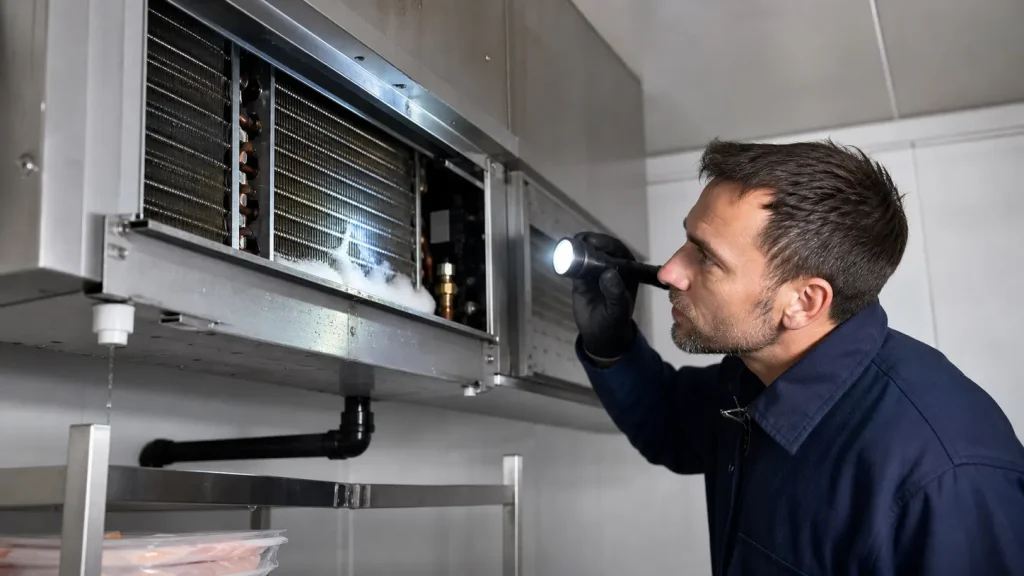
Frost on an evaporator coil, ice building on pipework, or a freezer that is icing up faster than it used to are all worth reporting. Icing usually points to a defrost fault, an airflow restriction or a refrigerant problem, and it makes things worse as it goes: ice on a coil insulates it, so the system works harder still.
Water on the floor
A blocked condensate drain will overflow. Beyond the slip hazard, standing water near electrical equipment is a genuine safety issue, and a drain that has blocked once will block again if nothing is done about why.
It holds temperature, but recovers slowly
This one is easy to miss because the thermometer looks fine most of the time. If a cold room used to come back to temperature within a few minutes of a delivery and now takes far longer, capacity is being lost somewhere. It will still read correctly on a quiet day and fail on a busy one — which is to say, it will fail at the worst possible moment.
The noise has changed
People who work near a machine every day know its normal sound better than any instrument. A new rattle, a rising whine, or a knock on start-up is usually a bearing, a fan or a mounting. None of those get better on their own, and a fan seizing in a condenser can take the compressor with it.
The condenser is visibly dirty
Condenser coils shed heat, and they cannot do that through a layer of dust, grease or kitchen fluff. This is the single most common cause of avoidable inefficiency in commercial refrigeration, and it is entirely preventable with cleaning on a schedule.
Door seals that no longer seal
Perished, torn or hardened gaskets let warm air in continuously. On a cold room door that gets heavy traffic it is a fast-moving wear item. A simple test: close the door on a piece of paper and try to pull it out. If it slides free easily, the seal is not doing its job at that point.
When watching should become a phone call
Report it rather than monitor it if the equipment is failing to hold its set temperature at all, if stock is at risk, if there is water near electrics, or if you can smell burning. Those are not wait-and-see situations.
For everything else — longer run times, new noises, gradual icing — the sensible move is to get it looked at on a planned visit rather than waiting for it to become urgent. It is cheaper, and you choose when it happens.
Related services
Commercial refrigeration · Planned servicing & maintenance · Emergency repairs
If something on this list sounds familiar, telephone 0800 952 0081 or send us the details.