- 24-Hour Emergency Support
- 0800 952 0081
- info@millenniumrac.co.uk
- North Shields, North East

Refrigeration is where a fault costs money fastest. A cold room that drifts out of range overnight can write off a week’s stock before anyone opens the door, and in food retail and hospitality that loss usually outweighs the repair several times over.
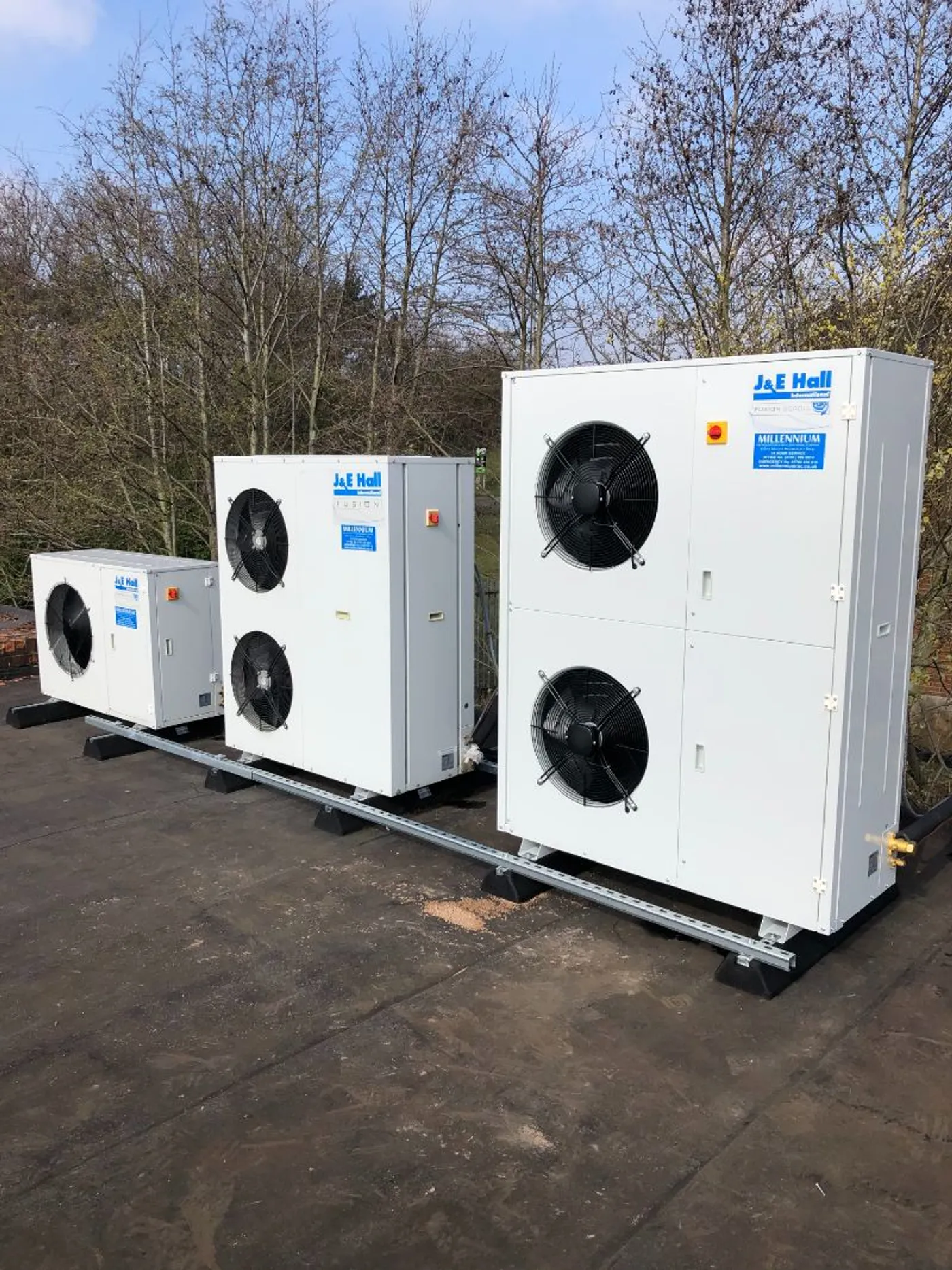
Millennium has worked on commercial refrigeration since 2000, from single display cabinets in convenience stores through to walk-in cold rooms and temperature-critical storage. We design and install new systems, take on maintenance of existing ones, and attend breakdowns.
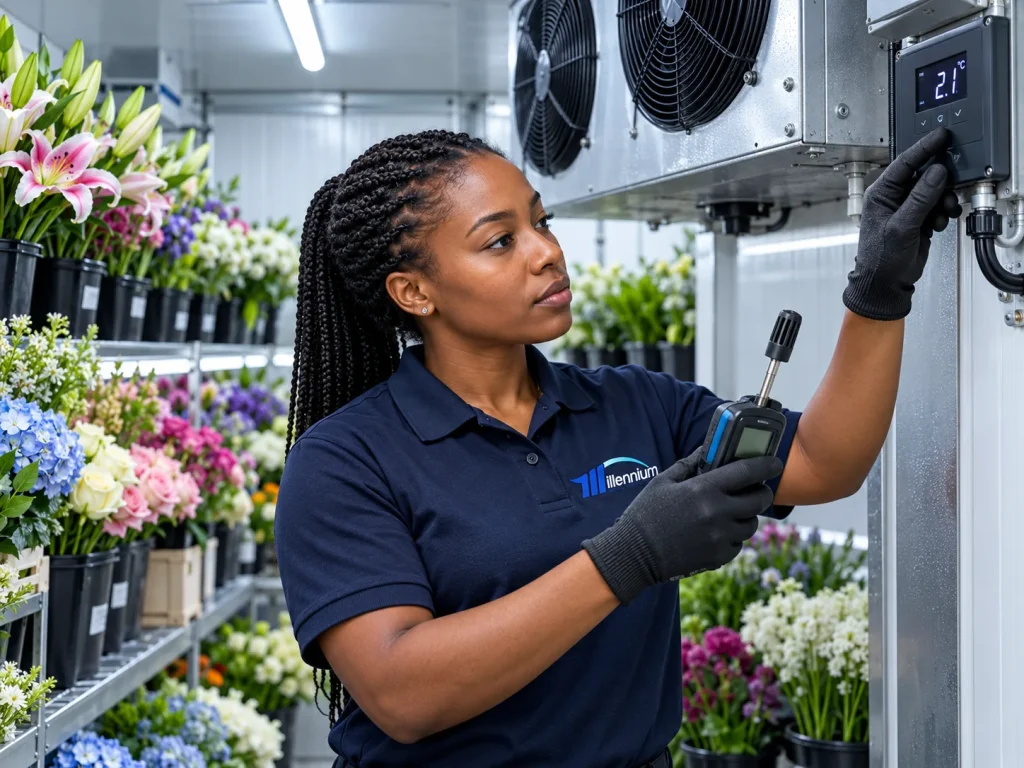
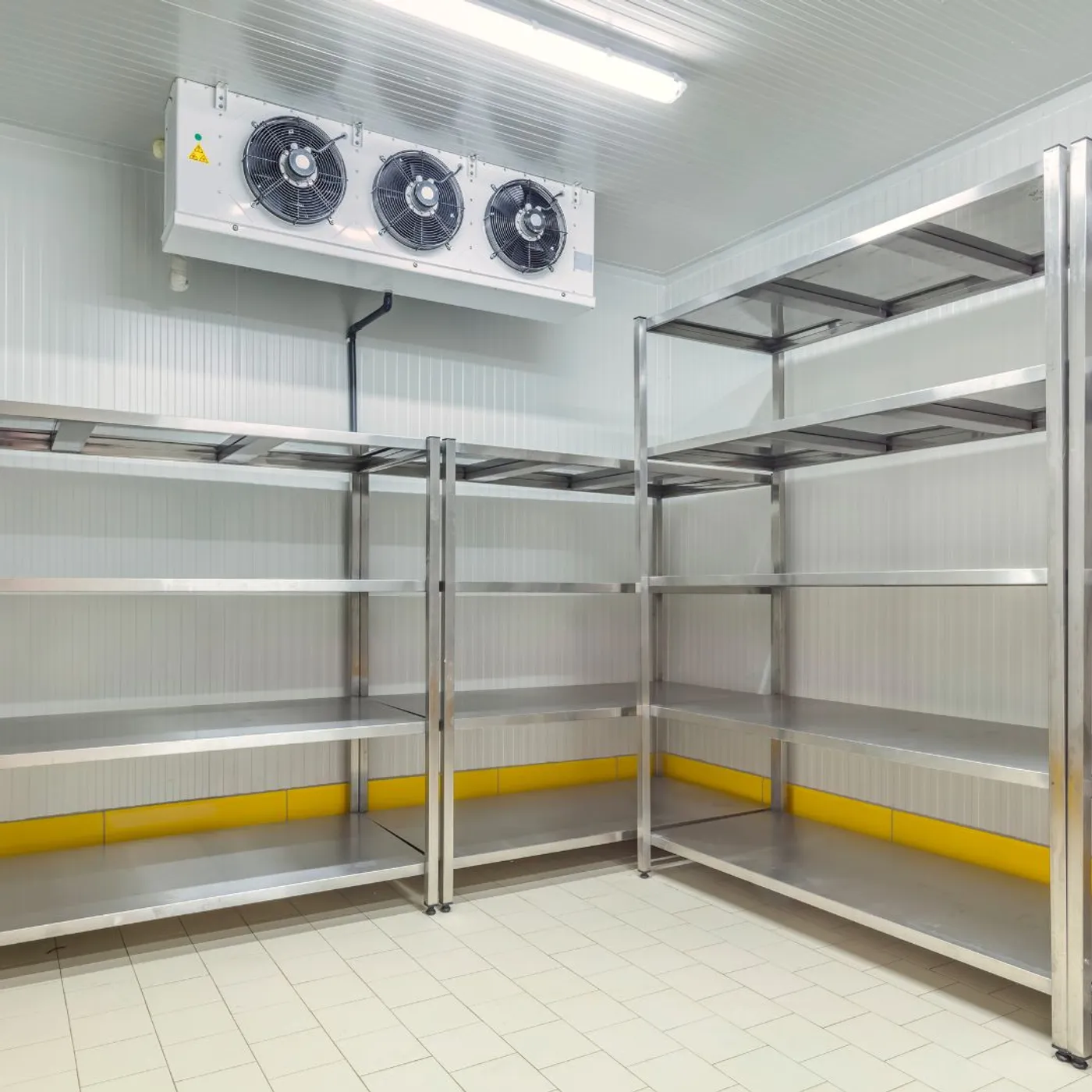
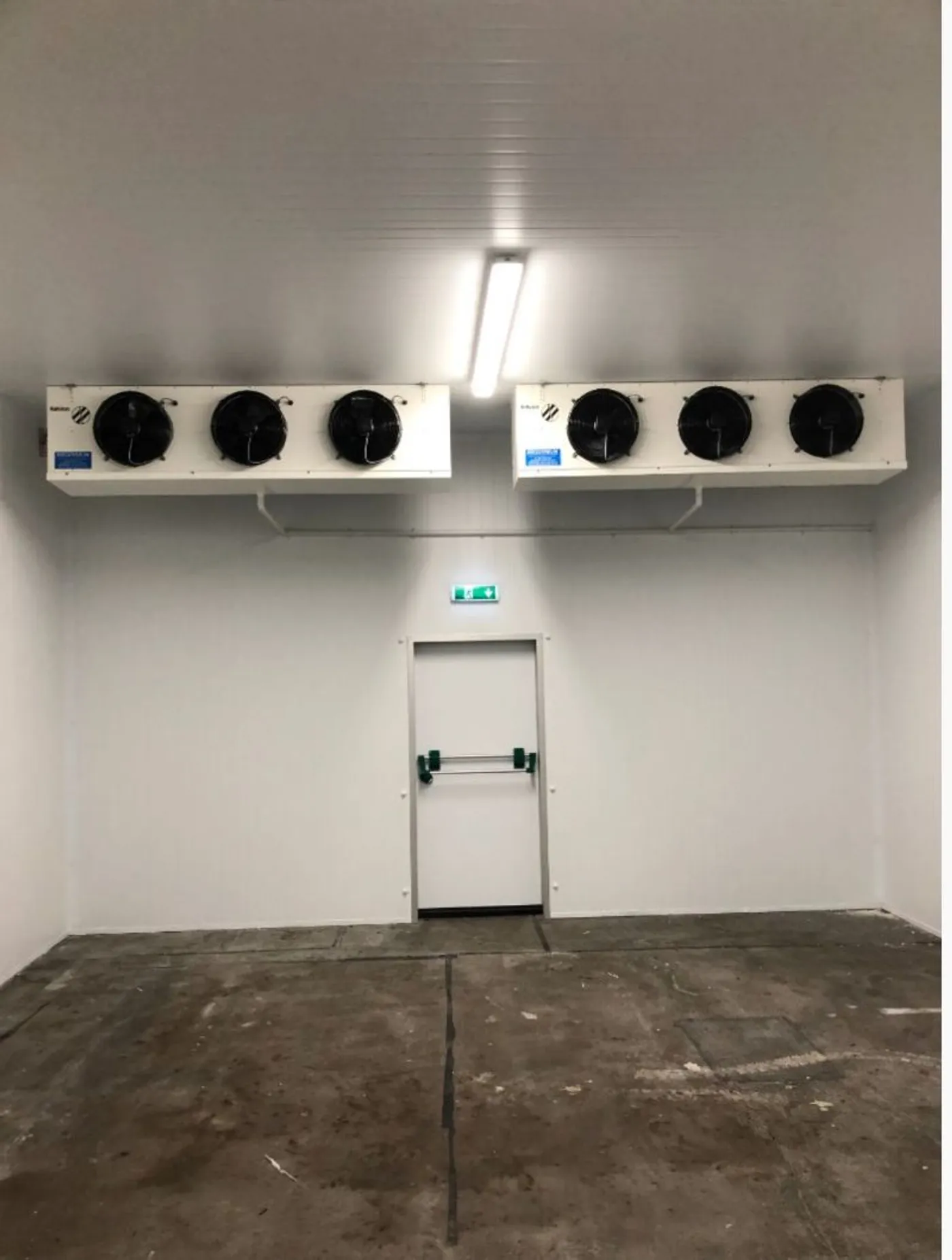
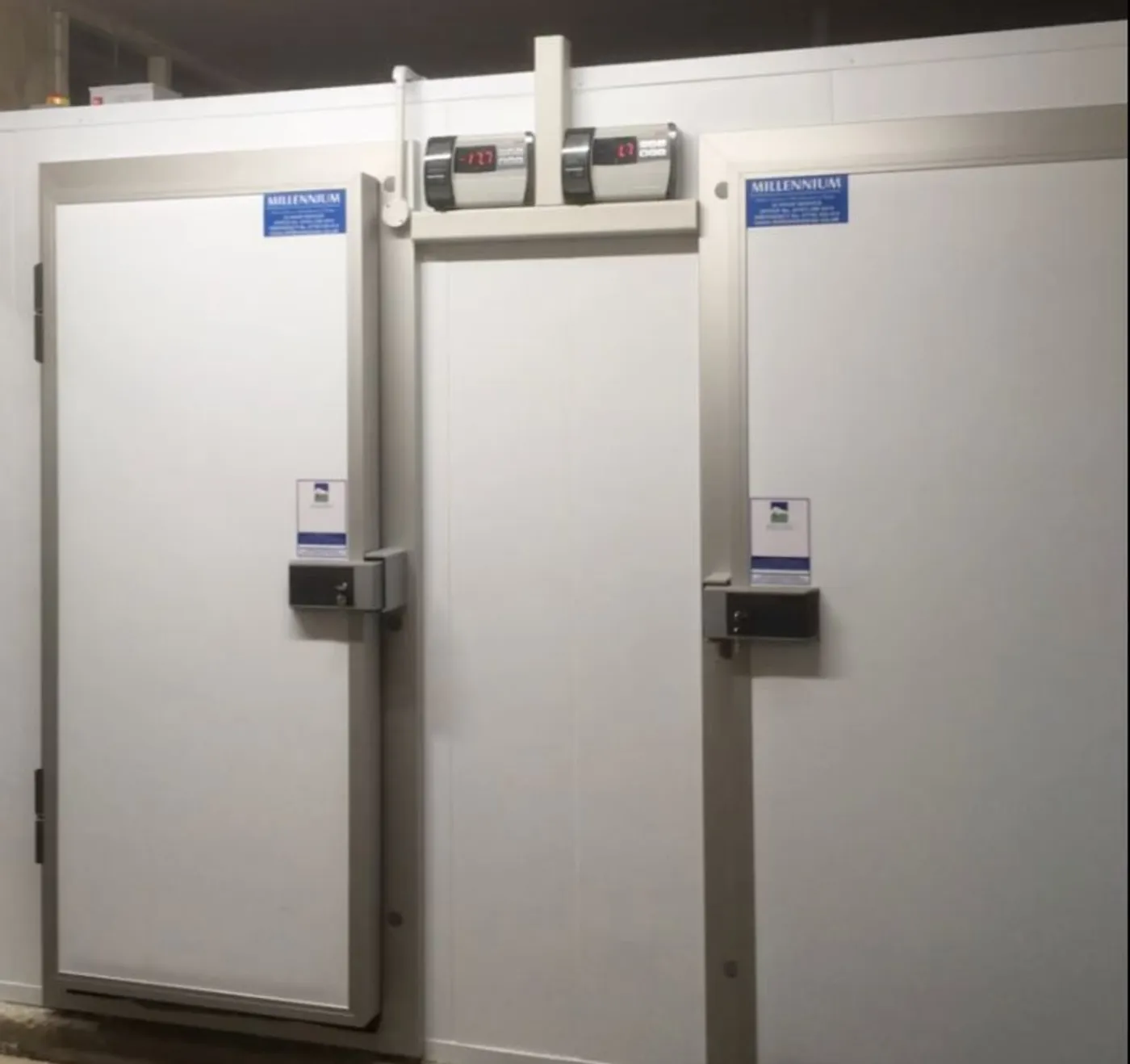
Cold rooms, walk-in chillers and walk-in freezers — designed around the space available, the door traffic and the temperature the stock actually requires.
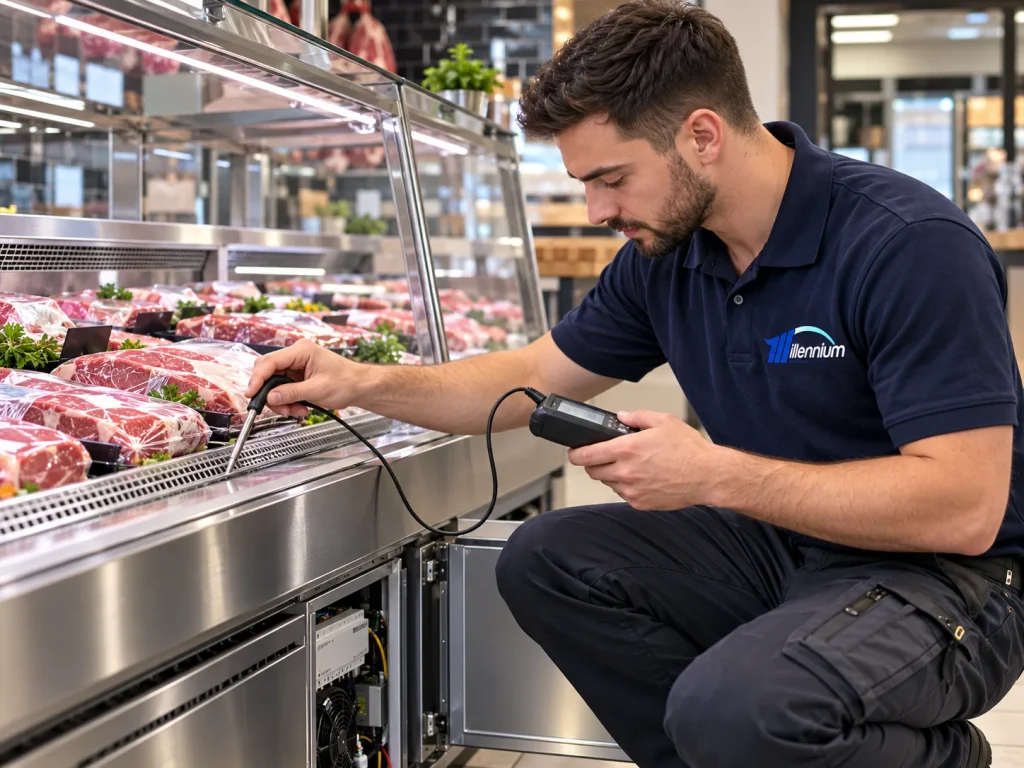
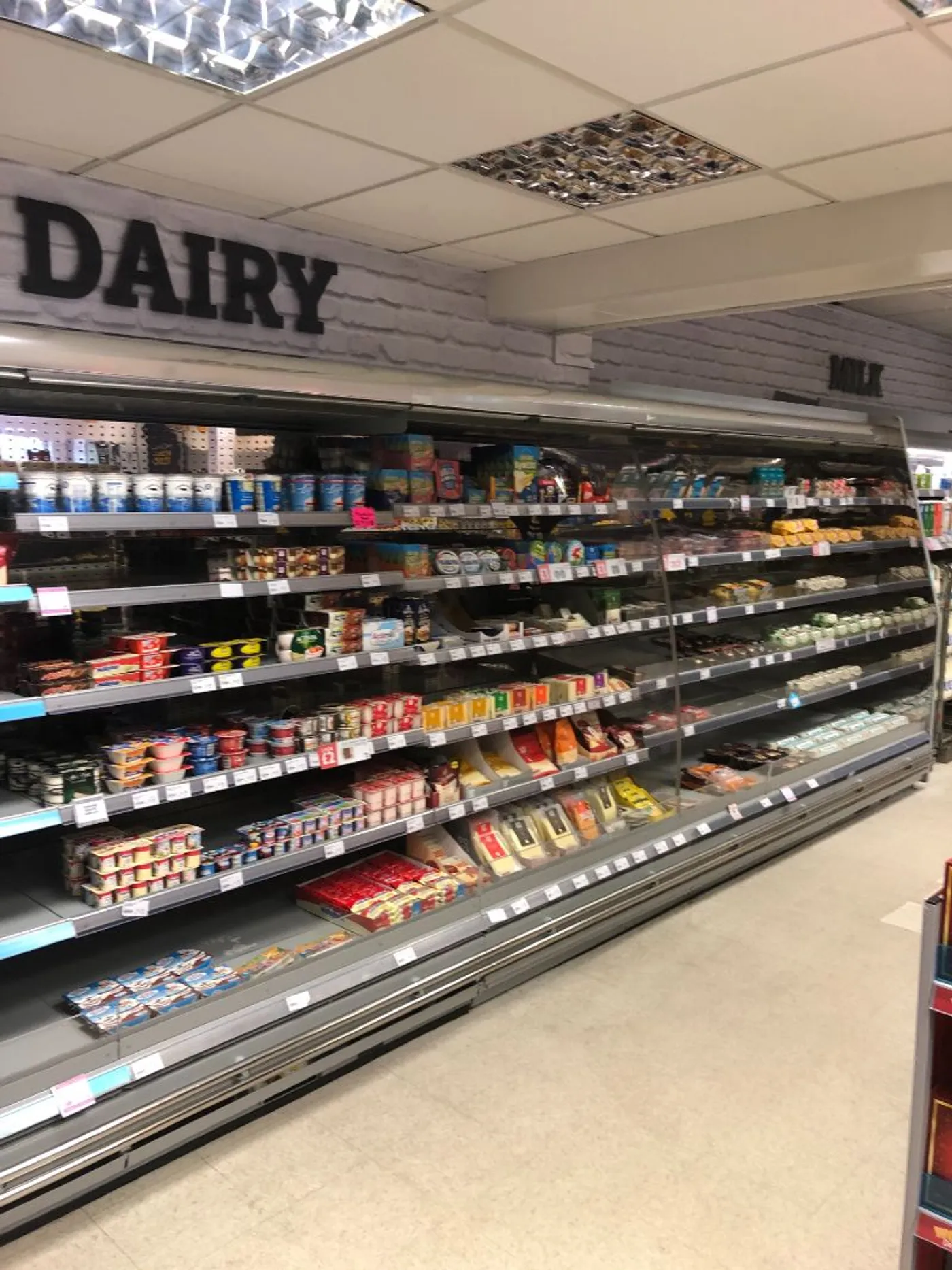
Multi-deck display cases and dairy cabinets for retail floors, where appearance and running cost both matter.
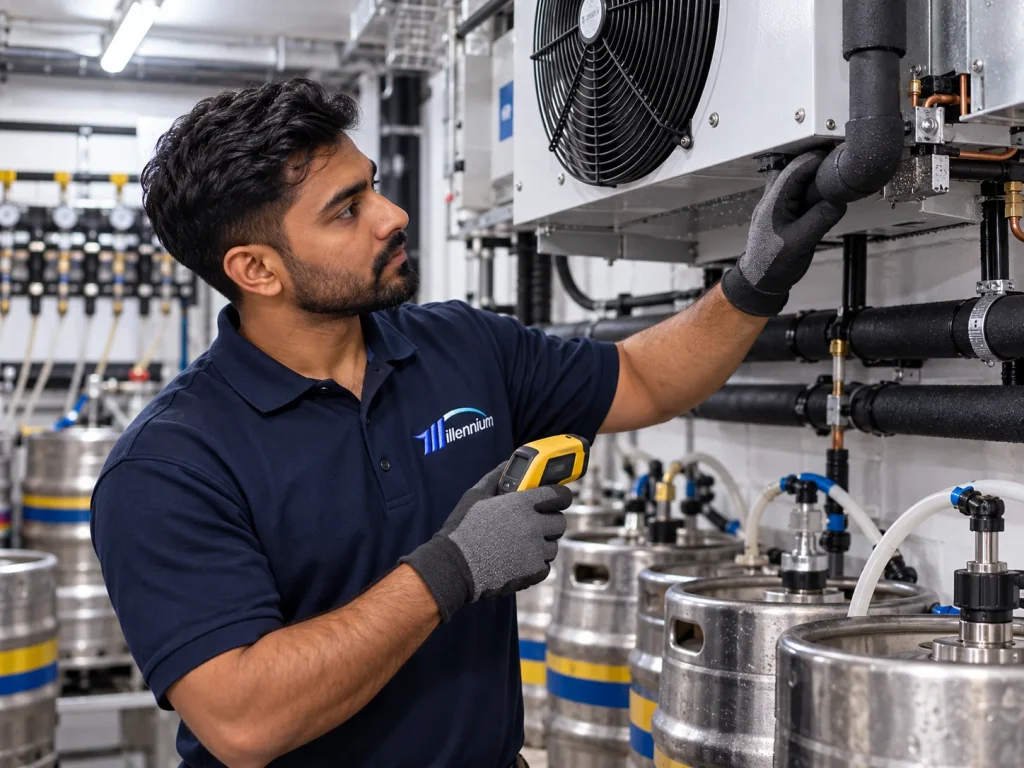
Bottle coolers and beer cellar cooling for pubs, bars and clubs.
Commercial kitchen refrigeration including under-counter units, upright cabinets and prep counters.
Ice machines for hospitality and catering.
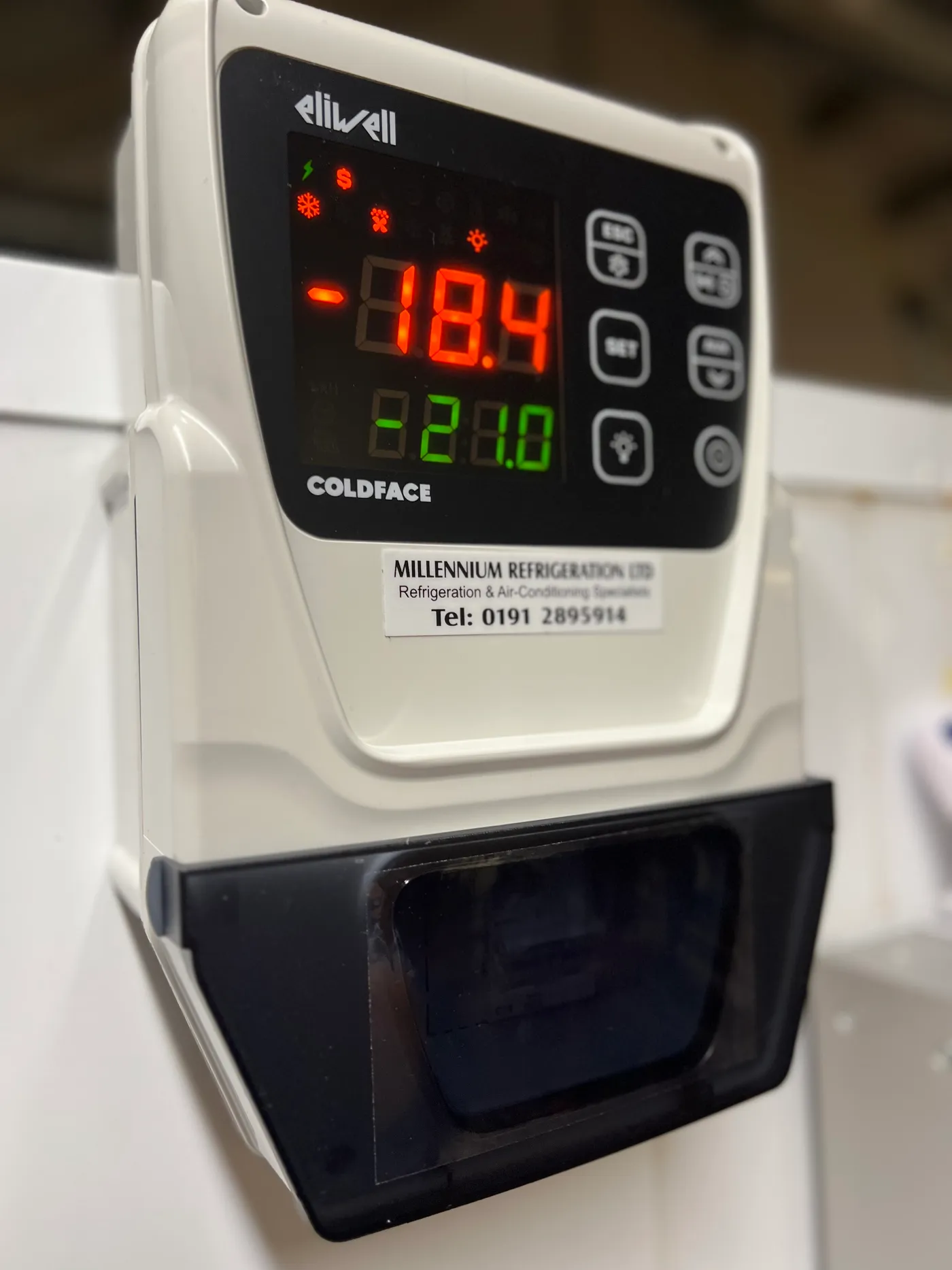
Temperature monitoring and alarms where a record of conditions is part of the requirement rather than a nice-to-have.
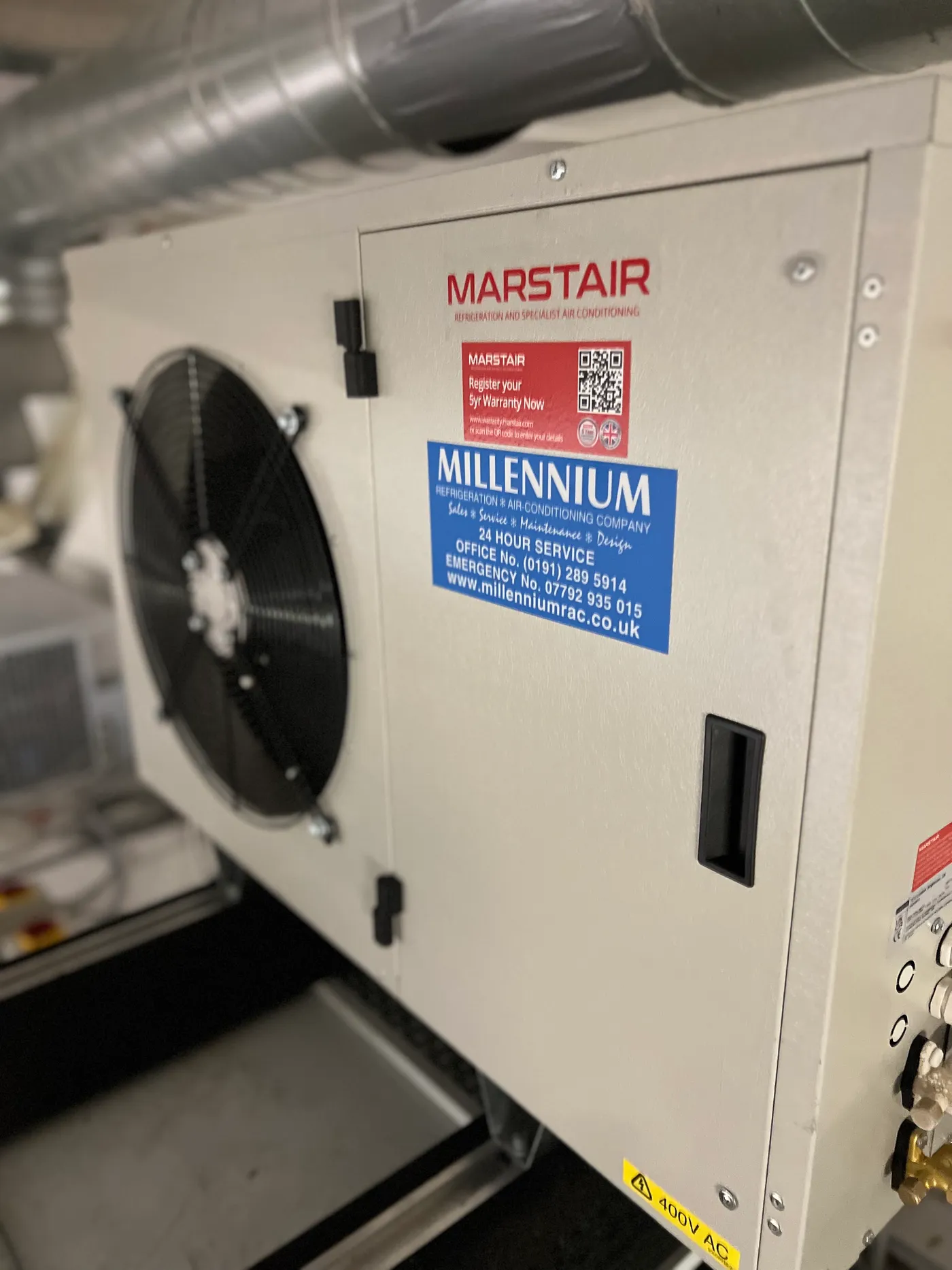
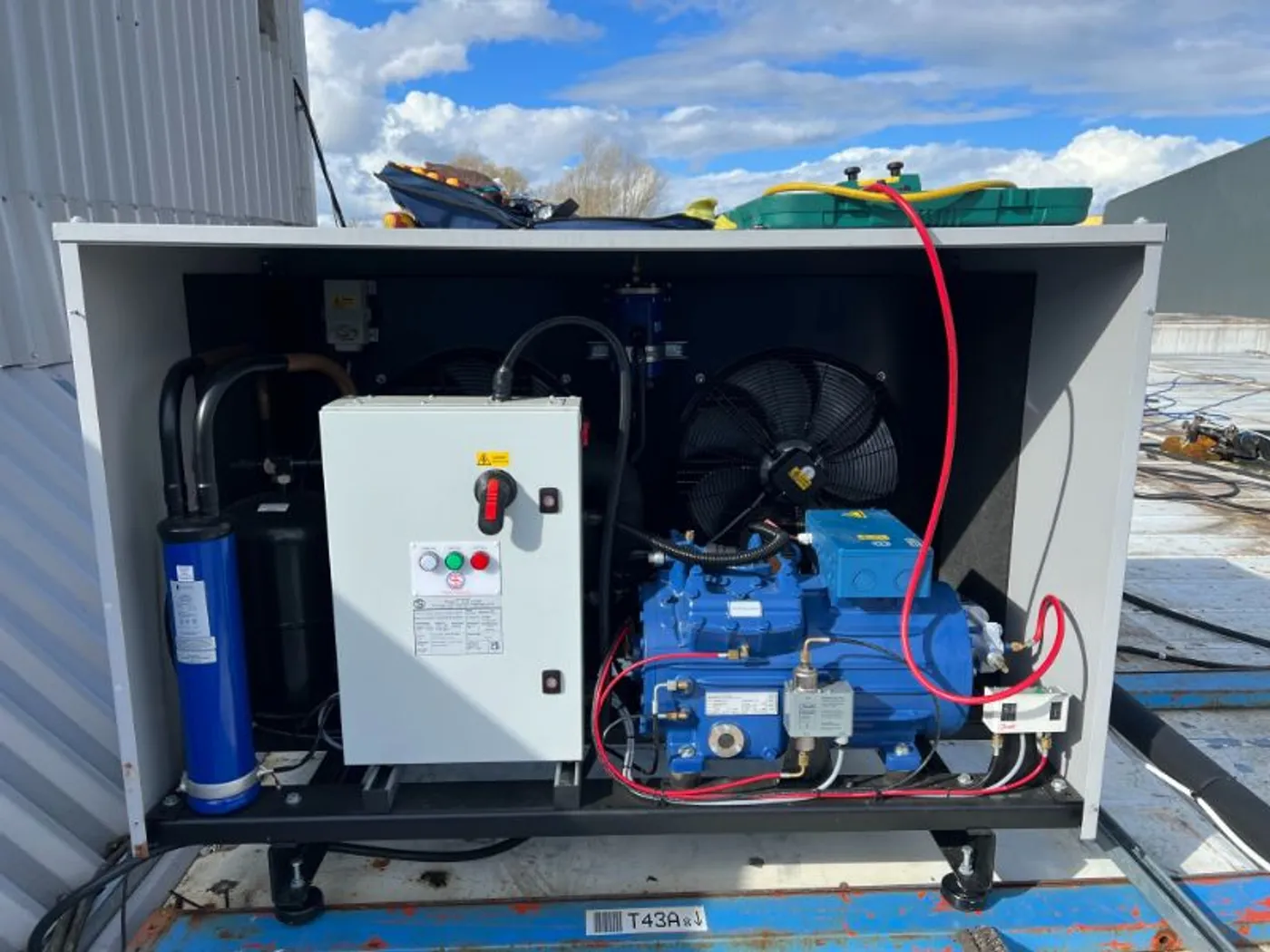
A refrigeration installation is designed around three things: the temperature the stock genuinely requires, the heat load the space and its door traffic will impose, and how the equipment will be got at when it needs servicing. Skip the third and you end up with a system that works beautifully until the first time someone has to reach the condenser.
We survey the site, specify accordingly, and give you a written quotation covering the equipment, the layout, the controls and the monitoring before anything is ordered.
Replacements are common, and not only when something has failed. Refrigerants are being phased down under the F-Gas rules, which over time affects the cost and availability of servicing older equipment. That does not mean everything needs replacing now — it means replacement decisions are worth taking deliberately rather than in an emergency.
Redundancy is a design decision, not an add-on. Where a failure would be genuinely serious, a second system and automatic changeover have to be designed in from the start; retrofitting them to a working store is far more disruptive.
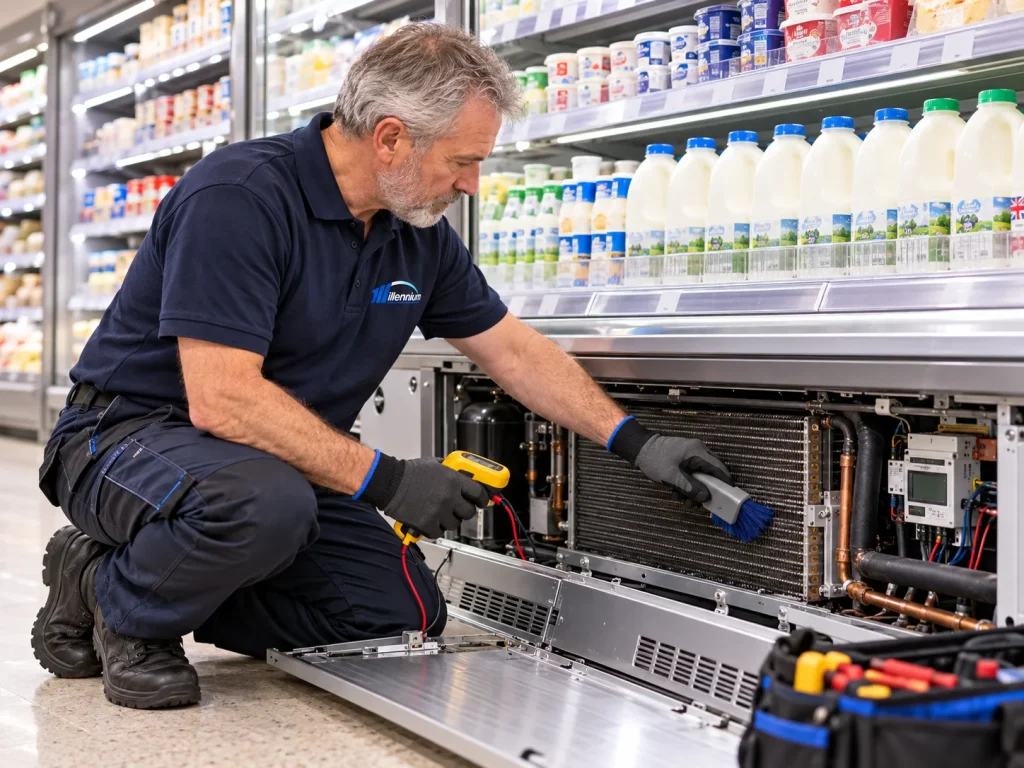
Refrigeration degrades quietly. Condensers foul with dust and grease, door seals perish, defrost cycles drift out of step with how the equipment is actually used, and refrigerant escapes slowly through a leak too small to notice. Each of those makes the system work harder for the same result, and the electricity bill absorbs it long before anything looks wrong.
Planned visits catch that. Scope and frequency are agreed per site and set out in writing before a contract starts, because a cold room in a busy kitchen and a cabinet in a quiet stockroom do not need the same attention.
We repair as well as maintain, on equipment we installed and equipment we did not. Where a system uses a fluorinated refrigerant there are legal duties on the operator around leak checking and record keeping; the thresholds depend on the refrigerant and the charge, so it is worth establishing which apply to your equipment rather than assuming.
More on planned servicing and maintenance, or emergency repairs if something has already failed.
Some refrigeration holds product where an excursion is not an inconvenience but a write-off — pharmaceutical storage, healthcare, and any operation where you have to be able to evidence the conditions stock was held in, not merely assert them.
That changes the specification. It usually means full backup rather than partial standby, automatic changeover so a failure does not wait for someone to notice it, a link to standby power, monitoring at several points rather than one, and an alarm that reaches a person out of hours.
We built exactly that for a pharmaceutical manufacturer supplying the NHS, pharmacies and healthcare organisations: a cold store of roughly 40 metres by 10 metres held between +2°C and +8°C, with 100% refrigeration backup, an automatic changeover panel, a generator link, a 16-point data logger and an auto-dialler alarm — read the project.
Worth reporting rather than watching: the unit running constantly instead of cycling off; ice building on a coil or on pipework; water on the floor from a blocked drain; slower recovery after a delivery than it used to manage; a change in the noise it makes; or a condenser you can see is dirty.
Each of those has a cheap fix caught early and an expensive one caught late. We have written these up in more detail in signs a commercial refrigeration system needs attention, along with what to do when a cold room loses temperature.
Tell us what equipment you run and where, and we will come back with practical options and a written quotation. If something is failing right now, telephone is quicker.